
The Best Countertop Materials For Your BBQ Grill Gazebo
Outdoor cooking becomes much easier when the countertop can handle heat, moisture, grease, and frequent cleaning without becoming difficult to maintain. Surface selection also affects food preparation, serving, and the overall appearance of the cooking area. For homeowners planning a grill gazebo, material choice should be based on actual cooking habits rather than appearance alone. With its long-standing experience in outdoor living products, SUNJOY offers examples of how integrated work surfaces and utility features can support a more practical grilling setup.
Consider Heat, Moisture, And Daily Use
Heat resistance should rank high on the selection list because hot cookware may occasionally be placed near the preparation area. Stone, porcelain, and certain engineered surfaces generally tolerate heat better than materials that can warp, discolor, or soften under repeated exposure.
Moisture creates another challenge outdoors. Rain, humidity, condensation, and spilled drinks can reach the counter throughout the year. Materials with low water absorption are often easier to maintain, particularly in regions where the cooking station remains exposed to changing weather.
Grease introduces a separate maintenance issue. Porous surfaces may absorb oils and sauces if they are not properly sealed, while smoother nonporous options can usually be wiped down more easily. Cleaning requirements should therefore be considered alongside durability.
Compare Popular Countertop Materials
Natural stone offers a substantial appearance and can handle demanding outdoor conditions when the specific material is suitable for exterior use. Granite is commonly considered for outdoor kitchens because of its hardness and resistance to heat, although periodic sealing may be recommended depending on the stone.
Porcelain provides another possibility for homeowners seeking a hard surface with relatively low water absorption. Outdoor-rated porcelain slabs or tiles can resist moisture and tolerate temperature changes, but installation quality remains important because cracks or poorly supported sections may create weak points.
Concrete offers flexibility in color, shape, thickness, and finish when the countertop is custom fabricated, making it suitable for a range of outdoor layouts. Proper curing and sealing matter, however, because repeated exposure to water and temperature changes can affect an inadequately prepared surface.
Match The Surface To The Cooking Layout
Countertop dimensions should reflect how food is prepared rather than simply filling every available section. Space beside the grill can hold trays, seasonings, and utensils, while another section may be reserved for chopping or plating.
The position of appliances also influences material requirements. Small electric accessories may need convenient power access, while heavier equipment calls for a structurally supported work surface. Keeping heat-producing appliances within their manufacturer’s recommended clearances remains essential regardless of the countertop material.
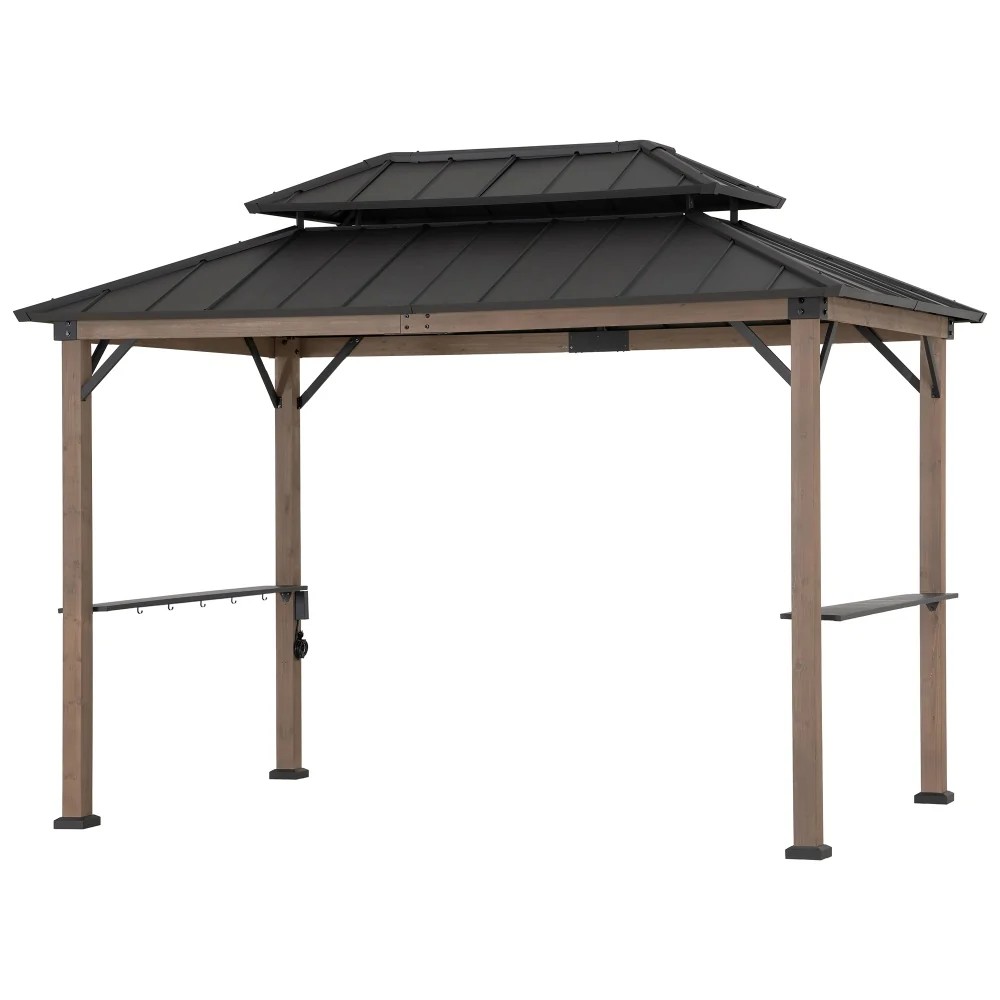
SUNJOY‘s Pro-Grill Performance Station – Brown, 8×12 illustrates how an integrated cooking station can incorporate utility features into the workspace. The model includes two electrical outlets and two USB ports for compatible outdoor-rated accessories, lighting, and device charging, while an integrated cord organizer helps route cables away from the main work area. Its built-in functionality shows why countertop planning should consider the relationship between preparation space, appliances, power access, and cable management rather than treating the surface as an isolated element.
Think About Cleaning And Maintenance
Frequent cooking places practical demands on every surface. Countertops should be easy to wipe after handling raw meat, marinades, sauces, and oils. Smooth finishes generally make routine cleaning less complicated, although manufacturer-approved cleaning products should be followed to avoid damaging sealants or finishes.
Staining resistance deserves attention when dark sauces, wine, coffee, or acidic ingredients are regularly used outdoors. Natural stone may require more maintenance than certain manufactured surfaces, while porcelain tends to offer low porosity. The best choice depends on how much upkeep the household is willing to perform.
Edges and joints deserve inspection too. Crumbs, grease, and moisture can accumulate around seams or where the counter meets another component. Thoughtful detailing can make these areas easier to access during cleaning and reduce places where residue remains unnoticed.
Balance Appearance With Long-Term Practicality
Visual coordination can make the cooking area feel intentional. Countertop color may complement the roof, frame, patio flooring, or surrounding landscape, while contrasting tones can visually separate the food-preparation zone from the rest of the structure.
Surface texture should also fit the setting. Highly polished materials may look refined but can show fingerprints and water marks more readily. Matte or lightly textured finishes may offer a more forgiving appearance, although excessive texture can make cleaning more difficult.
Budget should be viewed across the expected service life rather than through purchase price alone. Installation, sealing, replacement, cleaning supplies, and maintenance can change the overall cost of ownership. Comparing those factors gives homeowners a more useful basis for selecting a BBQ grill gazebo countertop.
Conclusion
Countertop selection shapes more than the appearance of an outdoor cooking area. Heat tolerance, moisture resistance, cleaning needs, installation conditions, climate, and everyday workflow all influence whether a material remains practical over time. Choosing surfaces that fit the cooking routine can make preparation and cleanup considerably easier, while thoughtful placement preserves room for appliances and serving activities. Anyone comparing grill gazebo designs should examine the available work area and integrated features alongside the countertop itself.
Similar considerations apply to a BBQ grill gazebo, where durable surfaces, sensible organization, and safe equipment placement can turn a sheltered cooking space into a more functional part of the backyard. SUNJOY’s integrated cooking solutions demonstrate how work areas and utility features can be planned together without allowing product promotion to overshadow the practical principles behind outdoor kitchen design.