
Arched vs. Flat-Roof Canopy Pergolas: How Curved Rafters Improve Rain Runoff and Wind Stability
Choosing the right patio pergola involves more than finding a design that complements your backyard. Roof shape can influence how a pergola handles rainfall, responds to wind, and provides shade throughout the day. Among the available options, arched and flat-roof canopy pergolas offer different advantages in appearance and everyday use. Understanding these differences can help homeowners select a structure that suits their outdoor space and local weather conditions.
For homeowners exploring pergola designs for patios, the key is to look beyond appearance and consider roof geometry, canopy materials, drainage, and structural support.
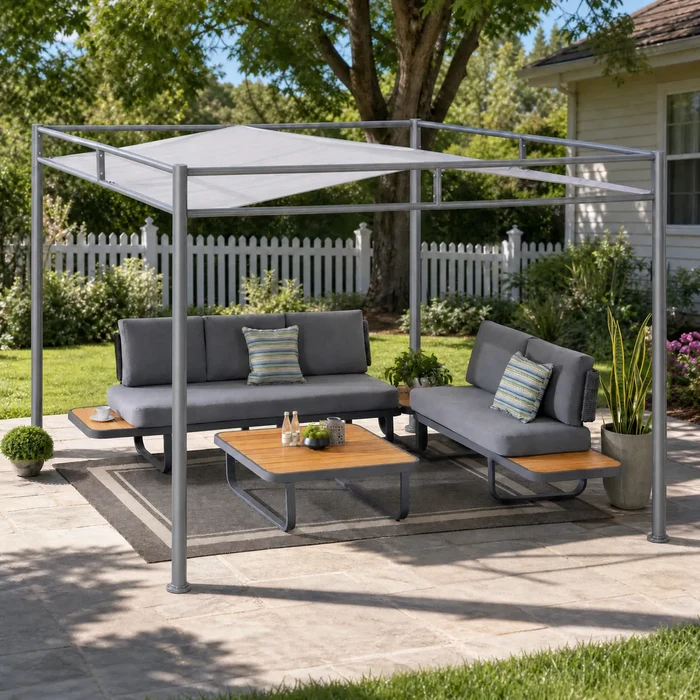
Understanding Arched and Flat-Roof Canopy Pergolas
A flat-roof canopy pergola typically features a relatively level top profile supported by a frame and crossbars. Its straight lines create a clean, contemporary appearance that works well with modern patios, rectangular dining tables, and outdoor lounge furniture. The simple shape can also make it easier to coordinate the pergola with existing architecture.
An arched canopy pergola introduces a curved roofline that creates a softer visual profile. Depending on the design, its curved rafters or canopy supports can add architectural interest while helping direct water toward the sides. This shape can be particularly appealing in gardens where homeowners want a more traditional or decorative outdoor setting.
However, the actual performance of either design depends on its construction. A flat-looking roof may still incorporate a slight slope, while an arched canopy’s drainage performance depends on its fabric tension, curvature, and support arrangement.
How Curved Rafters Can Improve Rain Runoff
Rainwater management is an important consideration when choosing a patio pergola. If water collects on a canopy instead of draining away, the additional weight can strain the fabric, support bars, and frame. Over time, repeated pooling may contribute to sagging or premature material wear.
Curved rafters can help create a roof profile that encourages rainwater to move toward lower edges rather than remain concentrated in one area. When paired with suitable canopy tension and an appropriate drainage path, this geometry may reduce the likelihood of water collecting in certain sections.
Flat-roof canopy pergolas can also manage rain effectively when they incorporate adequate slope, proper fabric tension, and drainage features. A level appearance does not necessarily mean the roof is completely horizontal. The important question is whether the complete design directs water away efficiently under its intended operating conditions.
Before purchasing, review the manufacturer’s guidance on rainfall exposure and canopy operation. Not every fabric canopy is designed for prolonged rain or heavy downpours, and neither an arched nor a flat roof automatically guarantees waterproof protection.
Does an Arched Roof Provide Better Wind Stability?
Curved rooflines may influence how wind moves around a pergola, but an arched shape alone does not guarantee better wind stability. Wind resistance depends on several factors, including frame materials, joint strength, anchoring, canopy design, and the direction and intensity of gusts.
An arched structure can alter airflow around its upper surface, potentially reducing certain areas of concentrated pressure depending on its geometry. However, wind can still lift or pull on an extended fabric canopy. A curved canopy may also experience substantial forces during severe weather, particularly if the fabric catches strong gusts.
For this reason, homeowners should prioritize verified product specifications rather than relying on roof shape alone. Check the anchoring requirements, recommended installation surface, and any stated wind limitations before choosing an outdoor pergola.
Retractable canopies require additional attention. If strong winds are forecast, follow the manufacturer’s instructions and retract the shade before conditions become unsafe. Never assume that a curved roof or sturdy-looking frame makes a canopy suitable for storms.
Which Pergola Design Best Fits Your Patio?
The right design depends on how you use your outdoor space. A flat-roof pergola may suit homeowners who prefer straight architectural lines and a streamlined setting for outdoor dining. Its geometric profile can work especially well over rectangular patios or seating areas.
An arched canopy pergola may appeal to those who want a more decorative silhouette and a softer transition between the structure and surrounding landscaping. Its curved profile can complement garden paths, flowering plants, and relaxed outdoor seating arrangements.
Both options should provide enough clearance for furniture, comfortable movement, and access to the canopy mechanism. Consider the patio’s dimensions, sun exposure, prevailing weather, and proximity to the house before deciding on a size or roof style.
Explore Patio Pergola Options from SUNJOY
Arched and flat-roof canopy pergolas can both create comfortable, attractive outdoor living spaces. Curved rafters may help guide rainwater runoff when supported by suitable canopy geometry, while wind stability ultimately depends on the entire structure rather than its silhouette alone.
By comparing drainage design, anchoring, material quality, and operating instructions, homeowners can make a more informed choice. With the right patio pergola from SUNJOY, you can create an outdoor setting that suits your style while making practical decisions for everyday use and changing weather.
SUNJOY offers outdoor pergola options in different styles and configurations, giving homeowners a starting point for comparing designs for their patios. When reviewing the collection, pay attention to the specific model’s roof profile, frame construction, canopy material, assembly requirements, and weather-use recommendations.