
What Role Do Conference Table Manufacturers Play in Ensuring Ergonomic Design for Meeting Room Tables?
A well-designed meeting environment depends on details that are often overlooked, from the position of supporting components to the accessibility of shared equipment. Participants may spend several hours discussing projects, reviewing documents, or attending presentations, making furniture functionality an important part of workplace planning.
Beyond appearance and basic construction, conference table manufacturers influence how meeting tables accommodate different activities through material selection, structural engineering, and functional customization. Leadcom Seating offers an example of how commercial furniture design can combine practical specifications with varied workplace requirements.
Material Choices and Their Influence on Daily Use
The materials used in meeting tables affect more than their visual appearance. Surface texture, edge finishing, and the characteristics of supporting components all influence how furniture performs during regular office activities. Engineered wood panels with melamine finishes, for instance, provide a smooth working surface suitable for documents, computers, and other meeting materials.
Metal components serve a different purpose within the overall construction. Steel, aluminum, and other fabricated materials can be incorporated into brackets, frames, and support structures according to their mechanical properties. Their thickness and connection methods influence the way loads are distributed throughout the furniture.
Surface finishing also deserves attention during product development. Powder coating is commonly applied to metal furniture components to create a consistent exterior appearance and provide an additional protective layer. Experienced conference table manufacturers consider these material characteristics when developing furniture for different commercial environments.
Customization Options for Different Workplace Preferences
Not every meeting room follows the same design requirements. Some businesses prefer an open appearance with minimal visual obstruction, while others require additional screening beneath the tabletop. Optional modesty panels provide a way to address these preferences without fundamentally changing the table’s primary function.
Material variations offer further customization possibilities. Steel panels provide a metal-based finish, whereas MFC panels maintain visual consistency with engineered wood furniture. Acoustic panels introduce another option for environments where material selection and the overall meeting-room atmosphere are important considerations.
Color selection can also influence how furniture integrates with existing office interiors. Neutral finishes are frequently used in corporate environments, although alternative colors may better match particular branding or interior design schemes. Such customization allows conference table manufacturers to accommodate different visual preferences while retaining consistent product specifications.
Functional Accessories and Their Practical Applications
Accessories can expand the ways a meeting table supports everyday activities. A book rack, for example, creates a designated place for reference documents, reducing the need to distribute every material across the main tabletop. This feature can be useful during training sessions, technical discussions, and meetings involving printed resources.
Mobility requirements vary between workplaces as well. Fixed furniture may remain in one position for extended periods, while multipurpose environments sometimes require tables to be repositioned. PU castors offer an optional mobility feature that can make furniture handling more convenient, subject to the floor conditions and the product’s intended use.
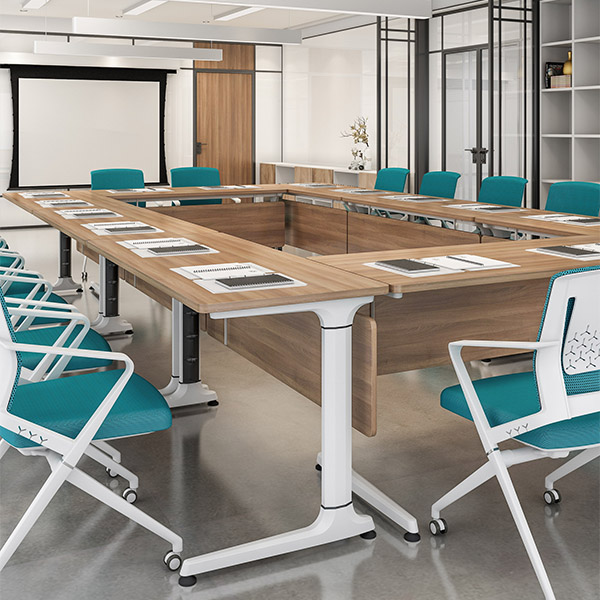
The BOSTON LS-4-20BT Fixed-top Meeting Table from Leadcom Seating demonstrates how these options can be incorporated into a commercial furniture design. Its available configurations include steel, MFC, or acoustic modesty panels, white powder coating as standard with silver and black alternatives, a steel book rack, and optional PU castors. These features illustrate how accessory choices can address different operational and interior preferences without changing the table’s fundamental purpose.
Product Development and Quality Evaluation
Furniture development involves more than determining dimensions and selecting materials. Manufacturers must also consider component compatibility, assembly methods, surface treatment, and the practical requirements of commercial use. Each element needs to function as part of the overall structure rather than being evaluated independently.
Product testing provides valuable information during this process. Inspections may examine connection stability, surface consistency, accessory installation, and the operation of movable components. Repeated-use assessments can also reveal whether particular fittings require adjustments before a product enters regular commercial use.
Communication with customers and distributors contributes another source of product-development information. Feedback about installation difficulties, preferred finishes, accessory requirements, and actual usage conditions can help manufacturers identify opportunities for refinement. Through these processes, conference table manufacturers can develop furniture specifications that correspond more closely to the expectations of different business environments.
Conclusion
The development of functional meeting tables involves a combination of material knowledge, component engineering, customization, and practical evaluation. Surface finishes influence everyday interaction, optional accessories address specific working requirements, and product testing provides information about how individual components perform together. These considerations shape the usefulness of furniture beyond its initial visual impression.
Leadcom Seating illustrates how commercial meeting furniture can incorporate different materials, finishes, and optional accessories within a consistent product range. Businesses assessing potential suppliers can benefit from examining not only product appearance but also customization choices, component specifications, and the intended application of each feature. Ultimately, conference table manufacturers contribute to the quality of workplace environments through the decisions made throughout the furniture design and development process.