
Choosing Sex Disease Test Kits for Multi-Pathogen STI Screening
Selecting appropriate diagnostic tools for urogenital infections requires a meticulous evaluation of clinical sensitivity, workflow efficiency, and multi-pathogen coverage. Laboratories face persistent challenges when differentiating overlapping symptoms caused by various sexually transmitted pathogens. Establishing a streamlined screening process depends heavily on choosing reliable sex disease test kits that minimize manual processing steps while maximizing daily diagnostic throughput.
Evaluating Multiplexing Efficiency in Molecular Diagnostics
Traditional singleplex assays often create operational bottlenecks in high-volume microbiology laboratories due to prolonged turnaround times and high sample volume consumption. Modern diagnostic directors must weigh multiplexing capabilities against institutional throughput demands to optimize resource allocation. Evaluating multi-pathogen screening tools requires a structured approach to assay sensitivity and reagent management.
Pathogens such as Neisseria gonorrhoeae, Chlamydia trachomatis, and Ureaplasma urealyticum frequently present with identical clinical manifestations, making simultaneous detection essential. Multiplex panel design directly influences laboratory resource efficiency and thermal cycling standardization. When molecular facilities deploy an advanced STD Test Kit for UU/CT/NG, technicians process multiple targets within a unified protocol.
Streamlining these workflow stages allows high-throughput testing centers to minimize cross-contamination risks and enhance daily sample output. Laboratories benefit significantly when a single assay resolves multiple potential causative agents without sacrificing analytical precision. This consolidation reduces hands-on preparation steps and supports faster clinical decision-making.
Specimen Compatibility and Workflow Optimization
Specimen compatibility remains a core determinant in assay selection and seamless workflow integration across diverse clinical environments. Laboratories handle varied sample matrices, including male urethral swabs, female cervical swabs, and urine specimens. An optimal diagnostic platform must accommodate these matrices without requiring complex pre-treatment protocols. Versatile sample collection options ensure consistent testing standards across different patient populations.
Internal quality controls are equally critical for verifying process adequacy during routine operations. Assays incorporating human beta-globin as an internal control provide continuous monitoring of extraction and amplification steps. This verification layer protects against false-negative results caused by polymerase chain reaction inhibition or specimen degradation. Ensuring reliable internal monitoring strengthens overall laboratory accreditation compliance and diagnostic confidence.
To support these rigorous diagnostic demands, BioPerfectus engineered specialized molecular testing solutions for modern laboratories.
Their diagnostic platforms are designed to address the complexities of urogenital microbiology and multi-pathogen screening. Industry professionals rely on these solutions to maintain high analytical standards while managing operational expenditure effectively.
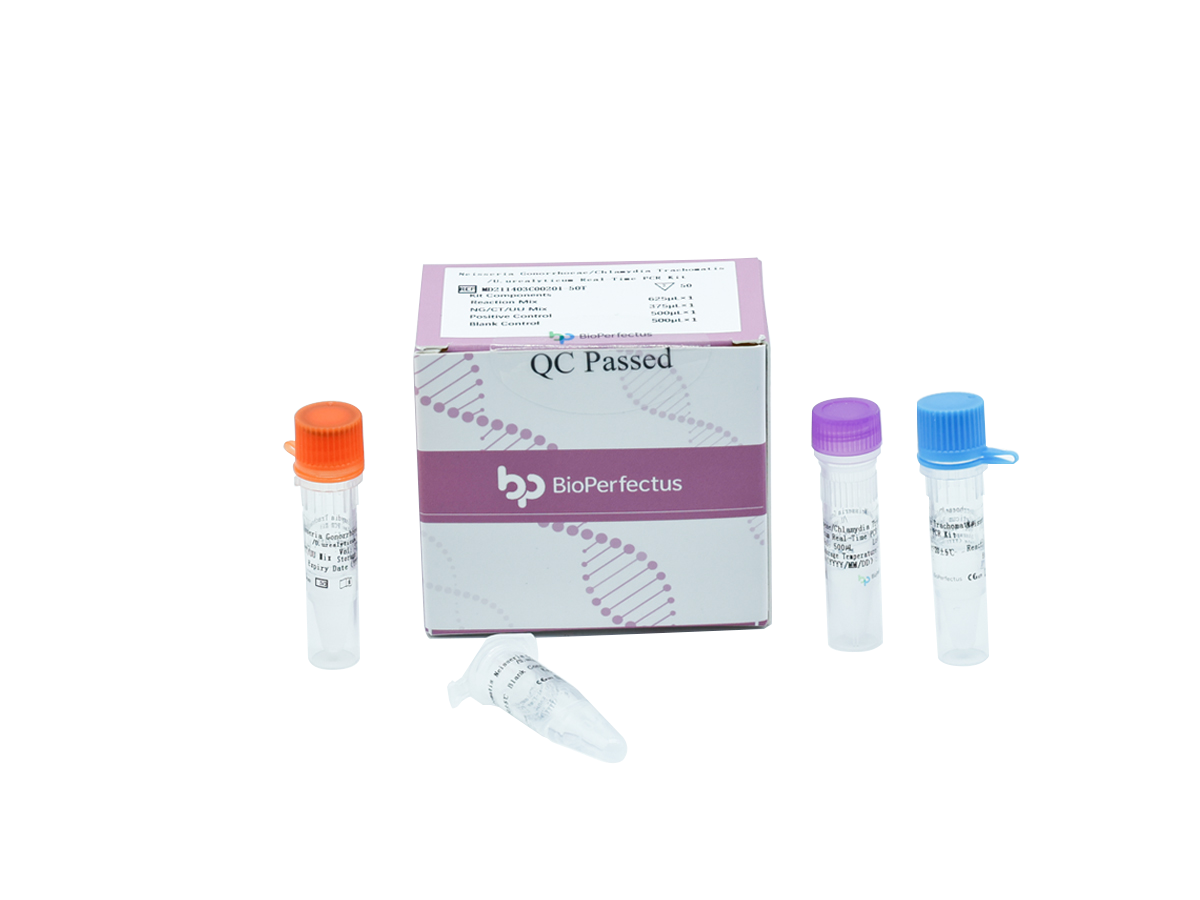
The Neisseria Gonorrhoeae/Chlamydia Trachomatis/U. Urealyticum Real-Time PCR Kit exemplifies this focus on efficient multiplex detection. This specific STD Test Kit for UU/CT/NG detects target nucleic acids in approximately eighty-one minutes on compatible thermal cyclers. Such rapid turnaround times empower clinical teams to initiate timely patient management protocols without unnecessary laboratory delays.
Analytical Precision and Clinical Validation Metrics
Precise handling and storage specifications further dictate the practical utility of molecular assays in routine clinical practice. Maintaining proper cold chain logistics, such as storage temperatures of minus twenty degrees Celsius, preserves reagent stability throughout the shelf life. Laboratories must review these logistical parameters before integrating new testing platforms into their standard operating procedures.
Clinical sensitivity and specificity metrics form the backbone of analytical validation for any diagnostic tool. The aforementioned sex disease test kits demonstrate high performance data across validated urogenital specimen types. Specifically, clinical evaluations show high sensitivity and specificity for all three targeted pathogens, minimizing diagnostic ambiguity.
As molecular diagnostics continue to advance, selecting comprehensive screening tools remains a priority for laboratory leadership. BioPerfectus provides robust technologies that align with international quality management requirements and clinical expectations. Facilities adopting these verified multiplex workflows achieve a balanced approach to diagnostic accuracy, speed, and cost efficiency.
Strategic Selection Considerations for Diagnostic Laboratories
Evaluating diagnostic investments ultimately requires looking beyond initial reagent costs to assess total workflow impact. Laboratories must balance sample input requirements, such as a five microliter input volume, with instrument compatibility. Careful alignment of these technical parameters ensures seamless integration into existing laboratory infrastructure.
Ultimately, choosing the right screening framework transforms routine laboratory operations into highly efficient diagnostic centers. BioPerfectus continues to support healthcare providers through continuous innovation in molecular assay design and manufacturing. Strategic decision-making based on robust validation data ensures long-term success in infectious disease management.
High-Throughput Solutions for Urogenital Pathogen Detection
Modern clinical environments demand reliable, high-throughput solutions for comprehensive urogenital pathogen detection. Utilizing advanced sex disease test kits enables laboratories to meet these clinical demands with exceptional precision. Careful adherence to validation criteria and workflow guidelines guarantees enduring diagnostic excellence across all testing applications.
Cold-Chain Logistics and Instrument Compatibility
Diagnostic facilities must also account for transportation temperatures and shelf life limitations during procurement planning. Reagents requiring storage at minus twenty degrees Celsius demand stringent cold chain verification upon receipt. Managing these logistical variables prevents reagent degradation and safeguards diagnostic integrity from delivery to final amplification.
Selecting an appropriate STD Test Kit for UU/CT/NG involves verifying instrument channels and fluorophore compatibility. Laboratories must ensure their thermal cyclers support the specific optical channels required for multiplex detection. Reviewing these hardware requirements beforehand prevents operational bottlenecks during assay implementation.
Internal Controls and Clinical Performance Validation
The inclusion of human beta-globin as an internal control serves a vital function in monitoring specimen integrity. Technicians rely on this endogenous control to confirm successful nucleic acid extraction across challenging clinical matrices. Detecting potential amplification inhibitors protects laboratories from reporting false negatives in routine screening workflows.
Evaluating clinical sensitivity and specificity data ensures that selected assays meet stringent diagnostic accreditation standards. Published validation metrics demonstrating high accuracy for Neisseria gonorrhoeae, Chlamydia trachomatis, and Ureaplasma urealyticum provide objective benchmarks. Reviewing these clinical performance indicators supports evidence-based purchasing decisions for healthcare institutions.


